AAC Awareness & Inclusion
October is Augmentative and Alternative Communication (AAC) Awareness Month!
You might be reading this blog for one of a few reasons:
Your child uses AAC.
You're exploring AAC options for your child.
You're new to AAC and eager to learn more.
You want to be a supportive communication partner.
Whatever brought you here..welcome! I’m so glad you’re taking the time to learn about AAC.
AAC Awareness Month was established in October 2007 by the LEAD Project Committee of ISAAC (International Society for Augmentative and Alternative Communication). The goal is to raise awareness about augmentative and alternative communication (AAC) and educate the public about the many different ways people communicate using AAC devices and tools. If you want to dive deeper into what AAC is, you can find more information here.
As a speech-language pathologist passionate about AAC, I see it as both an honor and a responsibility to advocate for AAC users and their families-not just in October, but all year long. I’m excited to kick off this important month by focusing on: Inclusion and AAC.
Whether you're an adult or a child, communicating with someone who uses AAC can feel unfamiliar or even intimidating at first. That’s okay. My goal is to provide some helpful insights and ways you can be a supportive communication partner.
Parents-I encourage you to read through this blog with your children. It’s a great way to start meaningful conversations about inclusion and help your child connect with AAC users at school and within the community.
What is AAC?
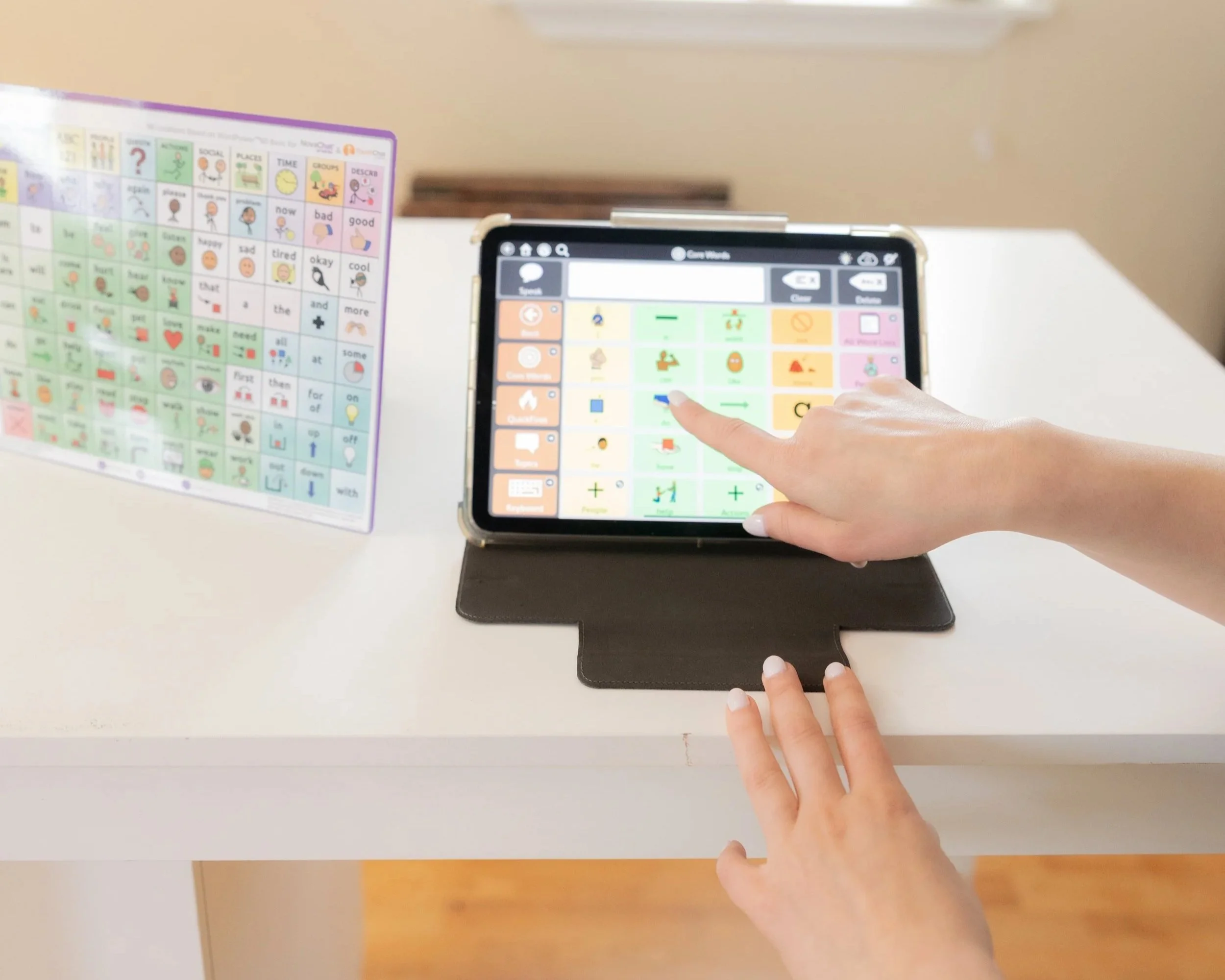
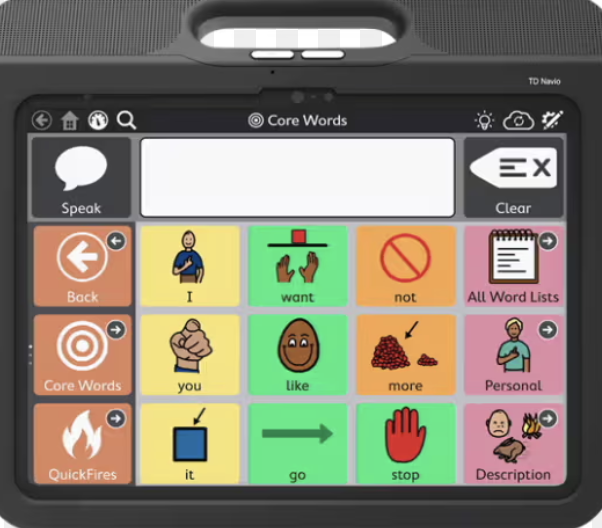
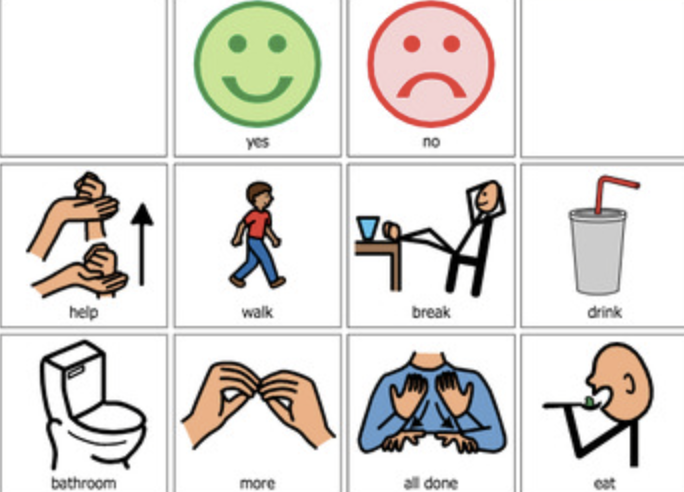
AAC refers to a variety of tools, systems, and strategies designed to support or supplement verbal speech. However, AAC isn’t a standalone solution. It is part of a multimodal communication approach that complements other forms of communication. Whether through vocalizations, gestures, sign language, or facial expressions, all communication methods deserve to be recognized and valued. Below you’ll find examples of high tech, mid tech, and no tech AAC.

Now, let’s learn some AAC vocab!
AAC Communication Partner Dictionary
-
Everyone who talks and interacts with AAC users.
-
The belief that every person, especially those with disabilities, has inherent capacity to learn, think, and communicate.Their difficulties in expressing these abilities should not be mistaken for an inability to possess them. This approach requires providing appropriate support, using age-appropriate language, and offering access to the same content as peers to foster self-worth, encourage participation, and achieve better learning outcomes
“Non-speaking doesn’t mean non-thinking” is an important statement in the AAC community.
-
Communicating using a variety of methods such as verbal speech, sign language, AAC devices, picture symbols, gestures, facial expressions, showing, typing, etc..
Tips for Communication Partners
When interacting and communicating with an AAC user, it’s important to follow the same conversational rules you would use with anyone else. Below are some helpful tips to support effective communication with AAC users.
-
Many AAC users face physical, cognitive, or environmental challenges that affect their speed. Some also need extra time to think about what they want to say. Good communication partners are patient, allowing time and space without rushing the speaker.
-
When interacting with AAC users pay close attention to multimodal cues. These include not only verbal language, but also non-verbal signals such as body language (e.g., posture, gestures, facial expressions). Observing these cues can provide a deeper understanding of a message, enhancing communication and fostering more effective interactions.
-
Honor and respect all attempts at communication. There are some strategies you can use to promote natural flow of conversation and provide opportunities for building and expanding upon language.
Here are three key strategies to effectively communicate with AAC users:
Acknowledge All Communication Attempts: Recognize and respond to every effort an AAC user makes to communicate.
Expand Their Message: Build upon the AAC user's initial message to add more detail . For example, if they say "go," you could model "go + fast" or "I +want + go."
Restate and Model Messages: Rephrase the AAC user's message in different ways to demonstrate varied expressions. If an AAC user says "want," you could say, "Oh! You want more food," while pointing to "want + more."
-
Asking lots of questions can feel like a test, not a real conversation. This limits chances to use language meaningfully. Instead, try commenting on what you see, do, or think. Describe things. Share ideas. Let AAC learners hear and see language used naturally.
AAC is more than just tools or technology! It's about connection, understanding, and ensuring everyone has a voice. As we celebrate AAC Awareness Month, let’s continue to learn, ask questions, and create inclusive spaces where AAC users feel seen, heard, and respected. Whether you're a parent, educator, peer, or community member, your role in supporting communication matters!
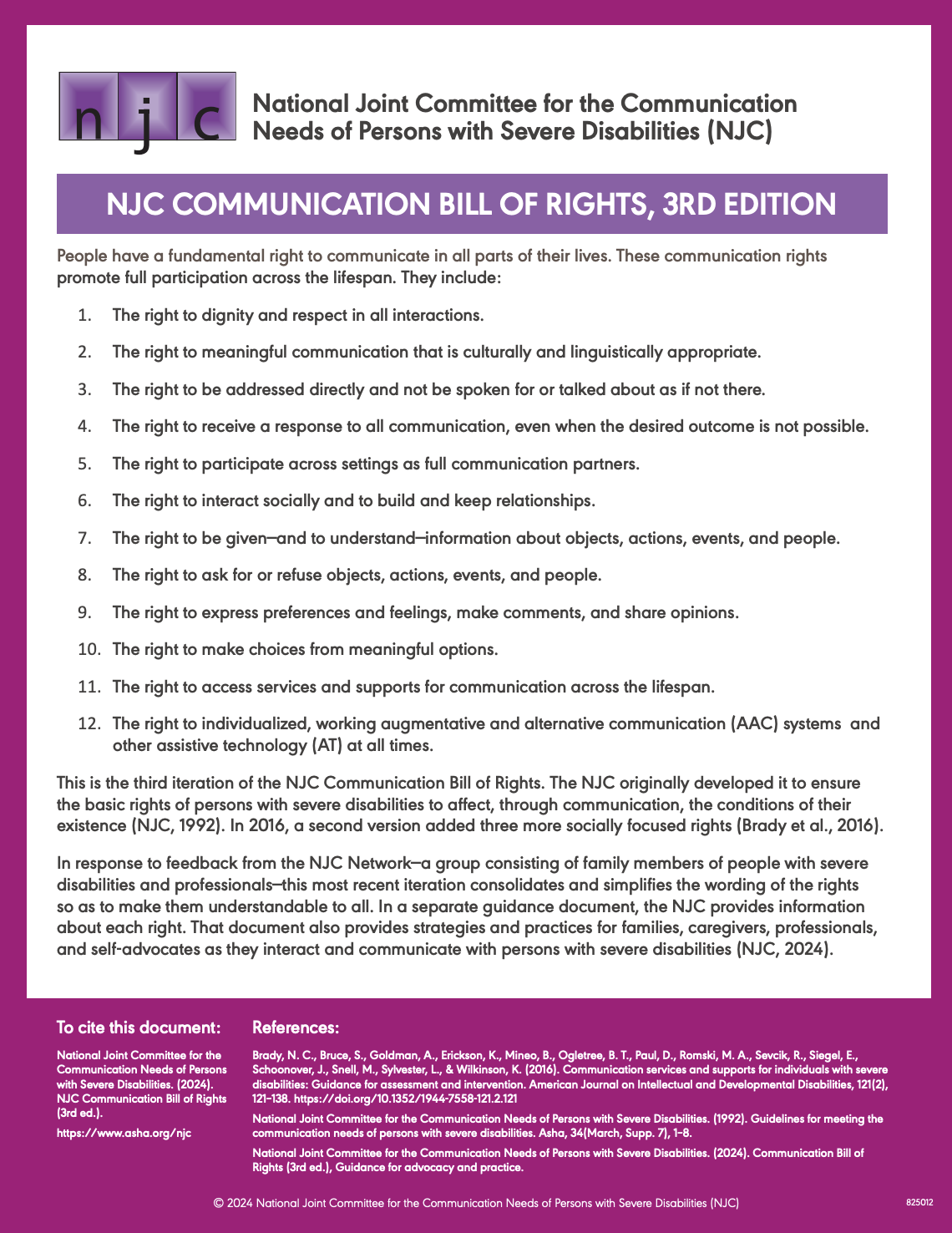
The Communication Bill of Rights
The Communication Bill of Rights, developed by the NJC, outlines 15 fundamental rights that affirm every individual's ability to impact their life through communication, especially those with severe disabilities. It serves as a guide for professionals and families to ensure access to communication tools, respect for personal dignity, and acknowledgment of all communication efforts. The bill emphasizes inclusion, choice-making, and meaningful participation in society.
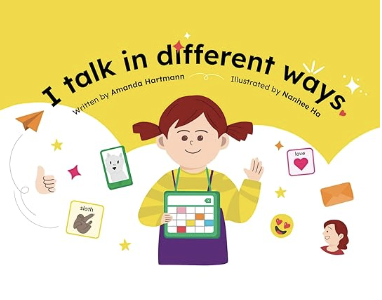
I encourage you to visit your local library or bookstore and read these amazing books featuring characters who use AAC!



Links & Resources
Hartmann, A., Sheldon, E., & Wetzels, W. (2019, September). Powerful Insights from AAC Users that Challenge How we Practice AAC. https://www.communicationmatters.org.uk/wp-content/uploads/2020/11/cmj_vol_34_no_3.pdf
National Joint Committee for the Communication Needs of Persons with Severe Disabilities. (2024). NJC Communication Bill of Rights (3rd ed.). https://www.asha.org/njc
Harris, Pam. Do's and Don'ts of AAC: Allow wait time. [Blog post]
This blog post contains affiliate links to the resources that I use in my own therapy room.
